



















DUBLIN: Several members of the Indian community, including Malayalis living in Ireland, have come forward to GNN 24×7 with allegations of organized fraud networks exploiting illegal Euro–INR currency exchange transactions conducted through WhatsApp groups.
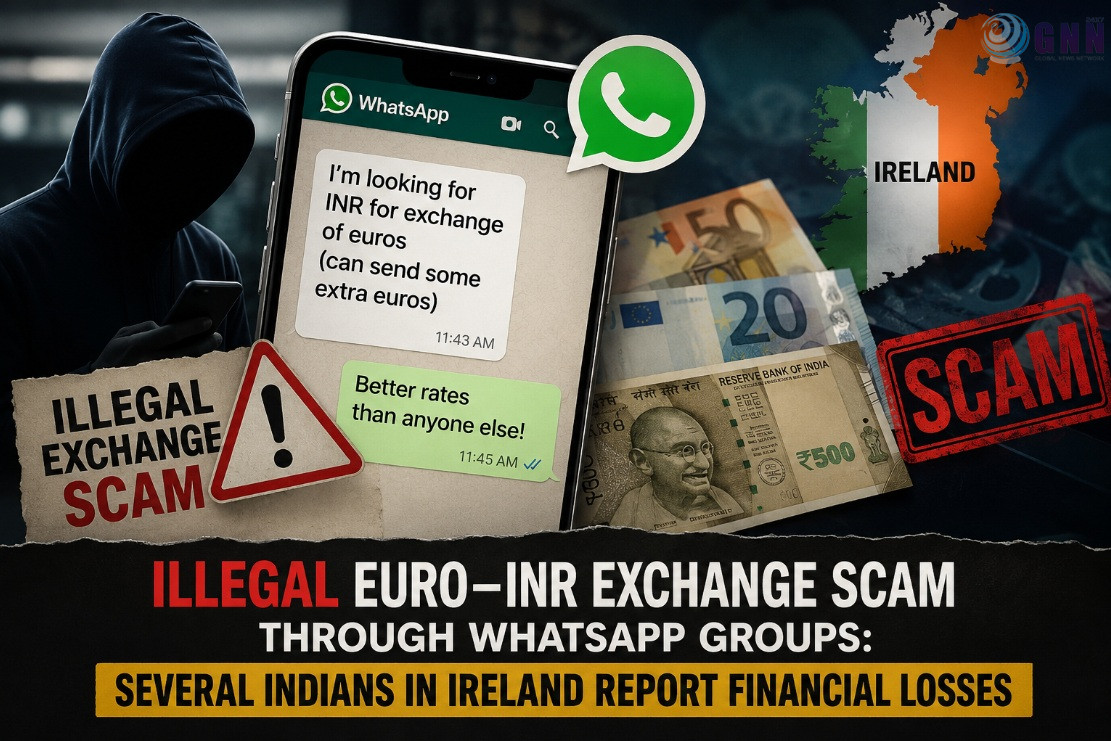
According to information received by GNN 24×7, individuals operating from external accounts have been infiltrating various Indian WhatsApp groups across Ireland, posting messages offering to exchange euros for Indian rupees at exchange rates significantly higher than those available through banks or authorised money transfer services. Typical messages include offers such as “Exchange euros for INR” and “Better exchange rates than anyone else,” encouraging members to engage in unofficial currency exchange transactions.
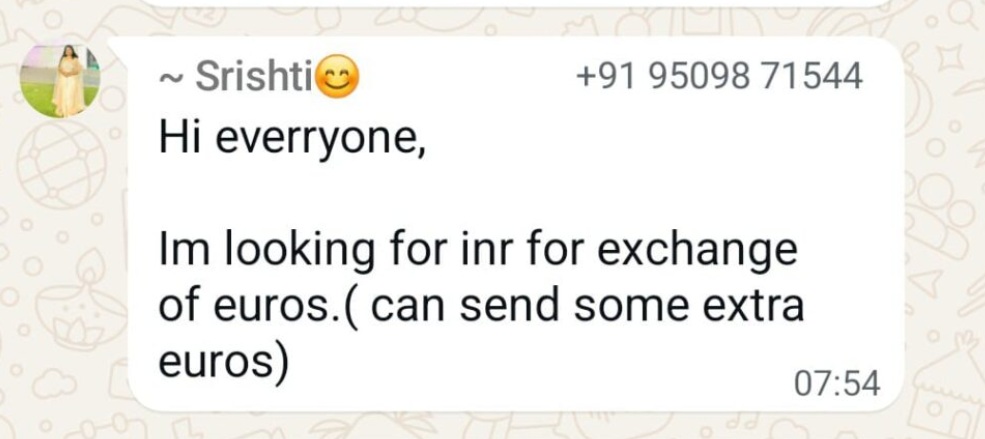
A WhatsApp screenshot obtained by GNN 24×7 shows a message posted from the Indian mobile number +91 95098 71544 stating:
“I’m looking for INR for exchange of euros (can send some extra euros).”
According to complainants, similar messages are used to initiate private conversations with potential victims, who are then offered unofficial Euro–INR exchange deals.
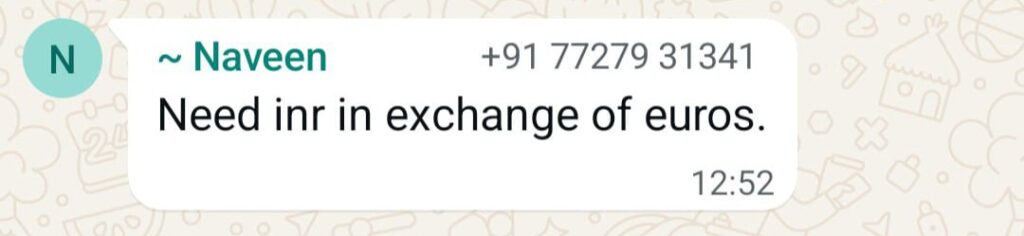
Complainants allege that after gaining their trust by promising exchange rates significantly better than those offered by banks or licensed money transfer providers, they were asked to transfer euros. However, the Indian rupees promised in return were allegedly never delivered. Several complainants claim that once the funds had been transferred, communication with the individuals involved either ceased completely or they became unresponsive, resulting in financial losses.
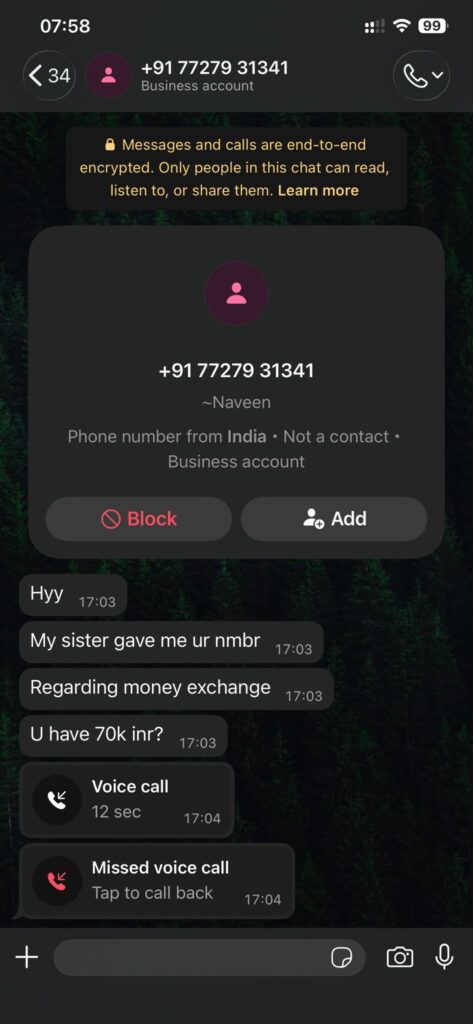
According to information received by GNN 24×7, several Indian nationals, including members of the Malayali community living across different parts of Ireland, have reportedly suffered financial losses in similar incidents. Multiple complainants have stated that they lost money after participating in unofficial Euro–INR currency exchange arrangements promoted through social media platforms.
Some complainants have expressed suspicions that the individuals behind these alleged scams may be part of organised groups operating from India. However, GNN 24×7 has not independently verified these claims, and no official investigation has concluded or identified those responsible.
The similarity of the complaints received suggests a recurring pattern, with multiple individuals reporting comparable methods of approach and alleged financial losses. GNN 24×7 understands that a number of victims have come forward claiming to have lost money through such unofficial currency exchange arrangements.
Financial experts warn that engaging in currency exchange transactions with unlicensed individuals or through social media platforms such as WhatsApp carries significant risks, including financial fraud and potential scrutiny under anti-money laundering (AML) regulations. They advise that transferring money outside official banking channels or licensed money transfer services exposes individuals to substantial financial risks, with little or no legal protection in the event of fraud.
Meanwhile, Ireland’s recent efforts to strengthen its response to financial crime are expected to bring greater scrutiny to informal currency exchange networks. The Irish Government recently announced a comprehensive 30-point Action Plan aimed at tackling money laundering, economic crime, and terrorist financing. In light of these measures, experts believe that unofficial currency exchange arrangements operating outside the regulated financial system are likely to attract increased attention from law enforcement and regulatory authorities.
Financial professionals continue to advise the public to conduct foreign currency transactions only through licensed banks and authorised money transfer service providers, ensuring both legal compliance and greater protection against fraud.
GNN 24×7 urges members of the public not to be lured by attractive Euro–INR exchange offers circulating on WhatsApp groups or other social media platforms. Before transferring money to unfamiliar individuals, people should verify the identity and credibility of the person involved. For all foreign currency transactions, the public is strongly advised to use only licensed banks and authorised money transfer service providers.
Anyone who has been a victim of such scams, or who has information about suspected illegal currency exchange activities, is encouraged to report the matter to the Garda National Economic Crime Bureau (GNECB). Victims should also notify their bank or financial institution immediately if they suspect they have been defrauded.
Report suspected economic crime to the Garda National Economic Crime Bureau (GNECB):
https://www.garda.ie/en/about-us/organised-serious-crime/garda-national-economic-crime-bureau/
Sources in India familiar with similar fraud cases have told GNN 24×7 that some of the Indian mobile phone numbers allegedly used to contact victims in these currency exchange scams have previously featured in complaints relating to financial fraud. The sources further claim that criminal complaints have been filed against certain individuals allegedly linked to these numbers as part of high-profile fraud investigations in India.
Public awareness and vigilance remain the strongest defence against online financial fraud and unauthorised currency exchange scams.